Top 10 Benefits of Copper Anti Color Agent for Various Industries?
In recent years, the demand for effective corrosion protection has surged across various industries. The Copper Anti-Color Agent has emerged as a revolutionary solution, recognized for its ability to combat discoloration and enhance the longevity of products. According to the Global Anti-Corrosion Coatings Market report from 2021, the sector is expected to reach $45 billion by 2026, indicating strong growth driven by innovations like the Copper Anti-Color Agent.
Dr. Emily Chen, a leading expert in materials science, states, "The introduction of Copper Anti-Color Agents provides a significant advantage in extending the lifespan of materials exposed to corrosive environments." This insight underscores the growing reliance on advanced chemical agents. Facilities in sectors such as automotive, construction, and electronics have reported marked improvements in product durability and aesthetic maintenance.
While the advantages are clear, some manufacturers grapple with integrating these new solutions into existing processes. Challenges like cost and application methods can hinder adoption. Nevertheless, the overall potential of Copper Anti-Color Agents presents a compelling reason for industries to evolve and adapt.

Benefits of Copper Anti Color Agent in Paint and Coatings Industry
Copper anti-color agents play a crucial role in the paint and coatings industry. These agents help prevent discoloration over time. Discoloration can occur due to exposure to sunlight, heat, or moisture. Using copper compounds can enhance the longevity of paints. They act as a protective layer, maintaining color stability in various applications.
Moreover, copper anti-color agents offer excellent antimicrobial properties. This is especially beneficial in coatings for roofs or facades. Antimicrobial effects help in preventing mold and mildew growth on surfaces. As a result, buildings remain visually appealing for longer periods. Although effective, the use of copper must be monitored carefully. Too much copper can cause environmental concerns.
Incorporating copper anti-color agents is not without challenges. Manufacturers need to balance efficacy with safety standards. Education on proper use is essential to avoid over-concentration. The paint industry continues to explore sustainable practices. Finding the right formulation can lead to better environmental outcomes and reduced waste. The evolving nature of materials also demands ongoing research.
Top 10 Benefits of Copper Anti Color Agent in the Paint and Coatings Industry
Enhancements to Copper Anti Color Agent in Plastic Manufacturing
Copper anti color agents significantly enhance plastic manufacturing processes. These agents improve color stability in finished products. This is crucial for industries where aesthetics matter, including automotive and consumer goods. Moreover, the inclusion of copper in plastic formulations often leads to increased durability. This results in longer-lasting products that meet consumer expectations.
The recent advancements in copper anti color technology are impressive. Researchers have explored ways to improve dispersion and effectiveness. However, challenges remain in ensuring uniform distribution within the plastic matrix. Manufacturers must also consider environmental impact. Finding a balance between performance and sustainability is ongoing. Investigations into biodegradable alternatives show potential, but they still lack efficacy compared to traditional options.
Incorporating copper anti color agents comes with potential drawbacks. Cost fluctuations in copper can affect overall production budgets. There are also compatibility issues with certain polymers, leading to inconsistent results. These factors require careful consideration during material selection. Industry feedback continues to drive research, pushing towards more effective solutions while addressing these challenges.
Role of Copper Anti Color Agent in Textile and Fabric Preservation
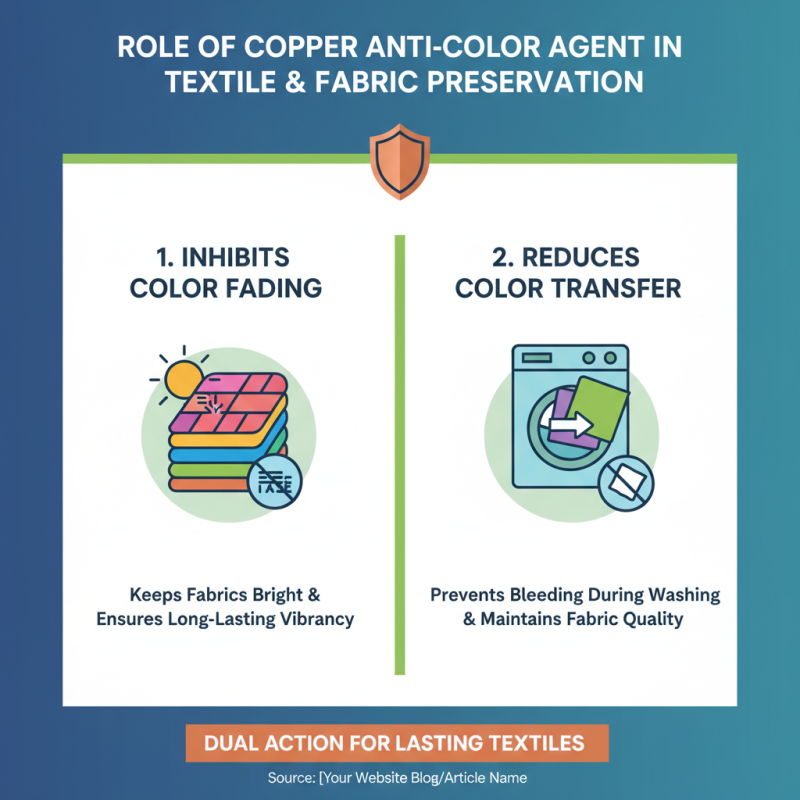
The role of copper anti-color agents in textile and fabric preservation is vital. These agents inhibit color fading, ensuring vibrant fabrics. They also reduce color transfer, which is essential during washing. This dual action helps maintain the quality of textiles over time.
Moreover, copper-based agents provide antimicrobial benefits. Fabrics treated with these agents resist mold and mildew. This is crucial for items like outdoor upholstery or activewear. These conditions can compromise fabric integrity, leading to unpleasant odors and deterioration.
However, the use of copper agents isn't without challenges. Tanning processes and mixing methods require precision. Improper application may lead to uneven color or fabric damage. Adopting sustainable practices is also necessary. Balancing effectiveness with environmental responsibility is a growing concern in the industry. This warrants continuous reflection and improvement in application techniques.
Advantages of Copper Anti Color Agent in Food Packaging Solutions
Copper anti-color agents offer numerous advantages, especially in food packaging solutions. These agents can effectively inhibit the growth of harmful bacteria. This is crucial in preserving food quality and extending shelf life. Many consumers prioritize food safety, and copper compounds meet these demands. By incorporating copper into packaging, companies enhance their product reliability.
Additionally, copper anti-color agents provide antioxidant properties. This means they can prevent food discoloration, maintaining the appealing appearance of packaged goods. A visually pleasing product attracts more customers. While useful, the effectiveness of these agents can vary based on concentration and application method. Finding the right balance is important for manufacturers.
Concerns about consumer awareness and regulations also arise. The use of copper in food contact materials must be monitored. It’s vital to ensure that levels remain safe for human consumption. Ignoring these aspects could lead to negative public perception. Food producers must remain transparent about their packaging choices for trust and reliability.
Top 10 Benefits of Copper Anti Color Agent for Various Industries
| Benefit |
Description |
Applicable Industries |
| Antimicrobial Properties |
Copper has inherent antimicrobial properties that help in reducing microbial growth. |
Food Packaging, Healthcare |
| Color Stability |
Provides excellent color stability to products, preventing discoloration. |
Food Packaging, Textiles |
| Environmental Safety |
Copper is eco-friendly and reduces environmental impact compared to synthetic agents. |
Packaging, Consumer Goods |
| Improved Shelf Life |
Extends the shelf life of food products by preventing spoilage. |
Food Industry |
| Enhanced Product Safety |
Reduces the risk of foodborne illnesses by inhibiting pathogens. |
Food Packaging, Healthcare |
| Versatility |
Can be used in a wide range of applications across different industries. |
Various Industries |
| Cost-Effectiveness |
Provides a cost-effective solution compared to other agents. |
Manufacturing, Food Processing |
| Aesthetic Appeal |
Enhances the visual appeal of packaged products. |
Cosmetics, Food Packaging |
| Non-Toxicity |
Safe for use in food-related applications, poses no health risks. |
Food Packaging |
| Regulatory Compliance |
Complies with various health and safety regulations for food contact. |
FoodIndustry, Packaging |
Impact of Copper Anti Color Agent on Construction Materials and Products
Copper anti color agents play a pivotal role in enhancing the durability of construction materials.
These agents prevent discoloration in materials such as concrete, metal, and wood. This improvement is crucial for maintaining aesthetic appeal in various structures.
By mitigating color fading, copper anti color agents extend the lifespan of building products.
The impact on construction products is notable. Using copper anti color agents, materials resist environmental factors better.
For instance, exposure to moisture can lead to staining. However, with these agents, surfaces maintain their integrity over time.
They create a protective layer, resulting in less maintenance and repair work.
Despite their benefits, copper anti color agents are not without challenges.
The formulations must be carefully developed to balance effectiveness and cost. Some agents may cause unexpected reactions with certain materials.
This potential requires thorough testing and assessment. As industries adopt these agents, ongoing research is essential to optimize their use and minimize drawbacks.