How to Choose the Right Dehydrating Agent for Effective Drying
Selecting the right dehydrating agent is crucial for effective drying processes in various industries. According to Dr. Emily Harper, a leading expert in food preservation technologies, “The choice of dehydrating agent can significantly affect the quality and shelf life of the product.” This statement underscores the importance of informed decision-making.
Different dehydrating agents serve unique purposes based on their chemical properties. For instance, silica gel is often used in packaging to keep moisture away from sensitive items. This agent excels in environments where humidity control is essential but may not be suitable for all drying applications. Alternatively, magnesium sulfate can absorb moisture effectively in various conditions, yet it may not align with specific health regulations.
Choosing the right dehydrating agent requires a balance of effectiveness and safety. Many businesses overlook the necessity of testing different agents. This may lead to subpar product quality or even spoilage. It is imperative to consider factors such as interaction with the material to be dried and regulatory compliance. Crafting a reliable drying strategy starts with recognizing the nuances of each dehydrating agent available.

Understanding the Basics of Dehydrating Agents and Their Functions
Choosing the right dehydrating agent is crucial for effective drying. The basic functions of these agents include absorbing moisture and creating an environment that prevents microbial growth. Common agents include silica gel, clay, and salt. Each has unique properties that can affect the drying process.
For instance, silica gel is highly efficient. It can absorb a significant amount of moisture and be reused after drying it out. However, it may not work well in high humidity. Clay, on the other hand, is natural and cost-effective, but it absorbs moisture slowly. Users might find that it requires frequent replacement.
When evaluating these agents, consider the specific application. What material are you drying? How moist is the environment? Trial and error may lead to less-than-perfect results. Observing how different agents perform will provide valuable insights. It’s important to reflect on these experiences to improve future drying processes.
Types of Dehydrating Agents Commonly Used in Drying Processes
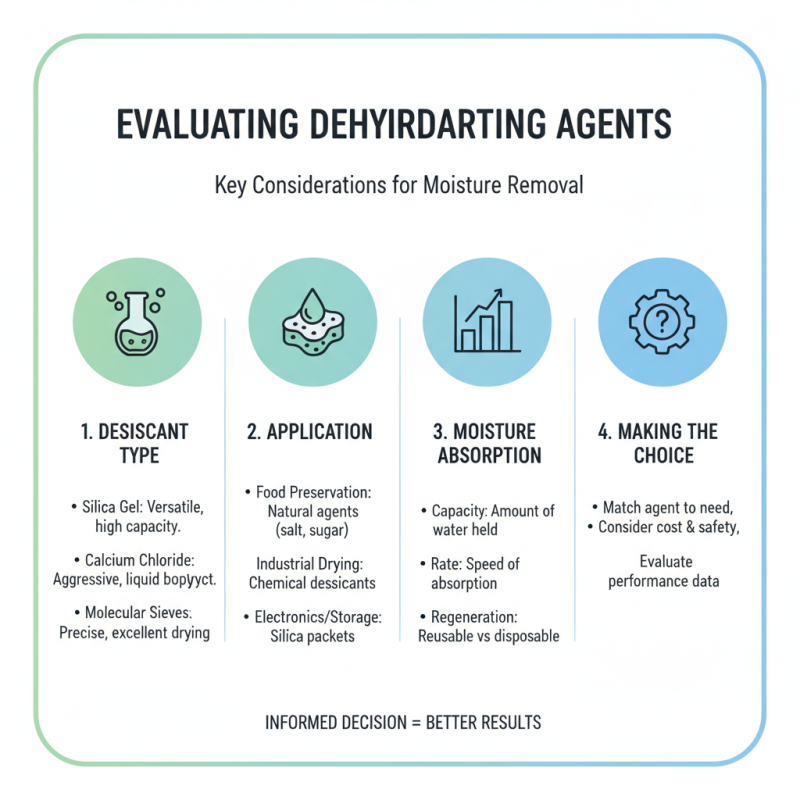
When selecting a dehydrating agent, it's essential to understand the types available. Common agents include silica gel, calcium chloride, and activated alumina.
Silica gel is widely used for moisture control and is effective in small spaces. Its granules absorb moisture quickly, helping to preserve freshness in items like food and electronics.
Calcium chloride, another popular choice, is hygroscopic in nature. It draws moisture from the air, making it ideal for larger areas or commercial applications. However, it can be less effective in high-humidity environments.
Activated alumina works well for air and gas drying. It has a high adsorption capacity, making it suitable for specific industries like pharmaceuticals.
Choosing the right agent can be tricky. Each type has unique characteristics that impact its efficiency. It's crucial to assess your specific needs. Consider the size of the area, the level of humidity, and the items you want to protect. Not all agents work universally, and some may lead to over-drying if not monitored. Testing different agents could lead to better results.
Factors to Consider When Choosing a Dehydrating Agent
Choosing the right dehydrating agent requires careful consideration of several factors. The effectiveness of a dehydrating agent depends on its compatibility with the material you wish to dry. Some agents work better for specific foods, such as fruits or vegetables, while others excel in drying herbs or meats. Research the properties of these agents to ensure you select one suitable for your drying project.
Humidity levels in your environment play a crucial role too. A dehydrating agent might struggle in a moist climate, making drying inefficient. Learning about your local humidity can help you pick an agent that will perform well.
Tips: Test different agents on small batches to see which achieves desired results. Monitor the drying process closely for unexpected issues. Take notes on conditions and outcomes for future reference.
Another consideration is the safety profile of the dehydrating agent. Some agents are more harmful than others, especially if used in food processing. Always prioritize options that are recognized as safe and effective.
Tips: Consult trusted sources for safety information. If a method feels complex or risky, consider revisiting your choice. Balancing efficacy and safety is crucial.
Evaluating the Effectiveness of Different Dehydrating Agents
Choosing a dehydrating agent requires careful consideration. Different agents offer varying effectiveness depending on the application. Some agents excel at moisture absorption, while others may underperform. Knowing the characteristics of each agent helps in making an informed choice.
When evaluating dehydrating agents, consider their moisture absorption capacity. Silica gel is a common option. It absorbs moisture quickly but may require replacement more frequently than some alternatives. Alternatively, calcium chloride is highly effective in humid environments but may leave residue. Both have strengths and weaknesses; assessing the environment is crucial.
**Tips:** Always check the agent's saturation point. Replace it when it becomes ineffective to maintain optimal drying conditions. Experimenting with smaller quantities may highlight which agent works best for your specific needs. Remember, not every option will fit perfectly; sometimes, adjustments are necessary for better results.
Best Practices for Using Dehydrating Agents in Drying Applications
When using dehydrating agents, it is crucial to understand their roles in drying processes. Various agents like silica gel, calcium chloride, and molecular sieves each have unique properties. For example, silica gel can absorb up to 40% of its weight in moisture, making it popular for various applications. Recent studies show that optimal moisture levels for food drying hover around 10-15%. This range ensures effective preservation while maintaining quality.
Best practices involve careful selection based on the target substance. High humidity environments may require a more robust agent, such as calcium chloride. Conversely, silica gel might be sufficient in lower humidity settings. Testing the effectiveness of an agent is also vital. Users should monitor moisture levels regularly. Improper usage can lead to inadequate drying and potential spoilage.
Dehydrator efficiency can be impacted by temperature and airflow. Studies indicate that heat above 65°C can degrade some dehydrating agents. Adjusting these factors appropriately can enhance drying performance. Moreover, it’s essential to consider environmental conditions and product type before finalizing an agent choice. This approach helps ensure effective and reliable drying results.
Comparison of Common Dehydrating Agents for Effective Drying