
Leave Your Message

What Is a Dehydrating Agent and How Does It Work?

A Dehydrating Agent is a substance that removes water from another material or reaction mixture. The idea sounds simple, but its chemistry is more precise. Some agents absorb water physically. Others react with water and form new compounds. A few shift chemical equilibrium by continuously removing water from the reaction environment.

Organic chemistry author Dr. Michael B. Smith explains the practical principle this way: “Removing water can redirect a reaction, but it does not make every process faster.” That distinction matters. Concentrated sulfuric acid, phosphorus pentoxide, and calcium chloride behave differently. Sulfuric acid can bind water strongly and may also promote further reactions. Calcium chloride is commonly used to dry certain liquids and gases. Phosphorus pentoxide is more aggressive and requires careful handling.

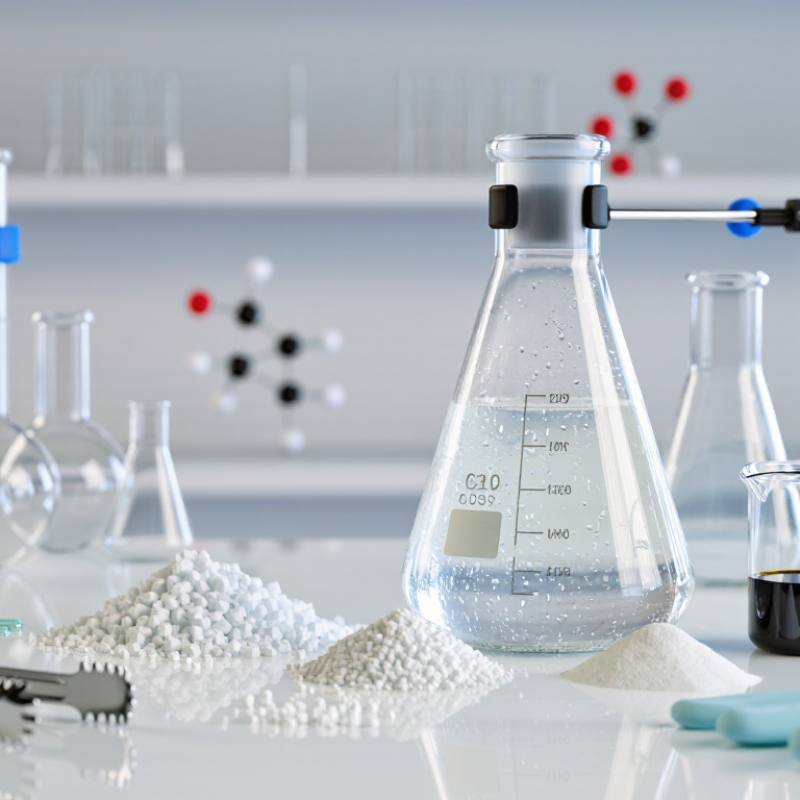
Picture a sealed laboratory flask with a damp solvent inside. A suitable Dehydrating Agent captures water molecules, reducing moisture around the reactants. In some reactions, this encourages condensation or ester formation. In other cases, it causes unwanted decomposition, heat, or corrosion. The result depends on concentration, temperature, contact time, and the material being treated.

A neat definition is incomplete.

Choosing an agent requires more than asking whether it “dries” something. Chemists examine compatibility, selectivity, contamination risks, and safe disposal. Even a familiar drying compound can produce misleading results when used carelessly. This guide explains how Dehydrating Agent chemistry works, where common examples fit, and why controlled conditions remain essential.
What Is a Dehydrating Agent and How Does It Work?

What Is a Dehydrating Agent? Definition, Types, and Industrial Uses

What Is a Dehydrating Agent? Definition, Types, and Industrial Uses

A dehydrating agent is a substance that removes water from another material. It may absorb moisture physically or react with it chemically. Some agents only dry gases, while others help remove water during chemical reactions. Common types include silica gel, calcium chloride, and molecular sieves. Molecular sieves contain tiny pores that trap water molecules selectively. Chemical dehydrating agents can be stronger and require stricter handling. The choice depends on temperature, material compatibility, and required dryness.

In industry, dehydrating agents protect compressed gases, solvents, electronic components, and packaged goods. Gas-processing facilities use them to reduce moisture before storage or transport. Manufacturing plants may also use them to improve reaction control and prevent corrosion. In my experience, selecting an agent is rarely just about maximum absorption. A powerful material may damage equipment or contaminate the product. Drying also needs measurement. A surface can look dry while hidden moisture remains inside. That detail is easy to miss.


Tips: Check the safety data before use. Confirm compatibility with containers and process materials. Measure humidity when accuracy matters. Replace saturated agents promptly. Reusing them without testing can create unreliable results. Small mistakes can spread quickly in industrial systems.

How Water Removal Works: Absorption, Adsorption, and Chemical Reaction

What Is a Dehydrating Agent and How Does It Work?

A dehydrating agent removes water from another substance, environment, or chemical mixture. Its action usually follows three paths: absorption, adsorption, or chemical reaction. These terms sound similar, but they describe different physical processes.

Absorption draws water into the interior of a material, much like a sponge taking in a spill. Some porous solids and liquids work this way. Adsorption keeps water on a material’s surface. Tiny pores create a large contact area, allowing moisture to cling tightly. This explains why a dry packet can protect sensitive equipment inside a sealed container. The surface may look unchanged, yet it is holding invisible moisture.

Chemical reaction works differently. The agent consumes water and forms a new substance. For example, calcium oxide reacts with water to produce calcium hydroxide and noticeable heat. This method can be powerful, but it is not automatically better. Heat, concentration, and compatibility must be checked carefully. In practical use, the boundaries are not always neat. A material may adsorb water first, then react with part of it. That detail is easy to miss. Temperature also matters, since warmer air often carries more moisture. Reliable selection depends on the material being dried, the required dryness, and whether the agent can be separated afterward. Moisture indicators and controlled measurements provide better evidence than appearance alone. A container can feel dry and still contain damaging humidity.

What Is a Dehydrating Agent and How Does It Work?

Dehydrating agents remove water through absorption, adsorption, or chemical reaction. The chart compares representative water uptake values in grams of water per 100 grams of agent.

Calcium chloride absorbs moisture into a liquid solution and can take up more than its own mass under extended exposure. Silica gel and molecular sieves adsorb water on internal surfaces or pores. Quicklime consumes water through a chemical reaction to form calcium hydroxide. Actual performance varies with temperature, humidity, particle size, and exposure time.

Why 98% Sulfuric Acid Dehydrates Through Strong Hygroscopicity

What Is a Dehydrating Agent and How Does It Work?

A dehydrating agent removes water from another substance or environment. Its action may involve chemical bonding, absorption, or a reaction that consumes water. Concentrated sulfuric acid is a powerful example. At about 98% concentration, it contains very little water and has a strong attraction to remaining moisture.

This behavior is called hygroscopicity. Sulfuric acid draws water from humid air, wet materials, and many organic compounds. The process releases considerable heat. When it contacts sugar or similar carbon-rich material, water may be pulled away, leaving behind a dark carbon residue. The acid does not simply “dry” everything. It can also react chemically and damage the material.

The 98% concentration matters. More water would reduce its ability to absorb additional moisture, while stronger acid creates greater handling risks. The phrase “removes all water” is also misleading. Real materials contain trapped, bonded, or inaccessible moisture. Results can vary with temperature, surface area, and composition. That limitation deserves attention.

Tips: Treat concentrated sulfuric acid as highly corrosive and heat-producing. Use suitable protective equipment, local ventilation, and trained laboratory supervision. Consult the relevant safety data sheet before handling it. Never rely on appearance alone to judge dryness or safety. A small amount of moisture can still trigger a violent temperature change.

How Molecular Sieves Use 3Å–5Å Pores to Trap Water Molecules

What Is a Dehydrating Agent and How Does It Work?

A dehydrating agent removes water from air, liquids, or materials. Molecular sieves do this through adsorption, not a chemical reaction. Their tiny pores attract and hold water molecules on internal surfaces. A water molecule is about 2.65 Å wide, so it can enter 3Å, 4Å, and 5Å pores. Larger molecules may be blocked. The pore size controls selectivity.

A 3Å sieve offers tighter openings and mainly captures water. A 4Å sieve provides broader access for water and some small molecules. A 5Å sieve can hold water while admitting even larger small compounds. In a sealed container, dry beads can reduce humidity around sensitive powders or components. Performance depends on temperature, exposure time, and starting moisture. The boundary is less tidy than diagrams suggest.

Tips: Choose the pore size for the material being dried. Keep the sieve sealed before use. A simple moisture indicator can reveal when capacity is nearly exhausted. Regeneration usually requires controlled heating and dry storage afterward. Do not assume every bead has equal capacity; structure and handling matter. Even a small opening in a storage vessel can slowly restore humidity.

How Silica Gel Adsorbs Up to 40% of Its Weight in Moisture

What Is a Dehydrating Agent and How Does It Work?

A dehydrating agent removes water from air, materials, or chemical mixtures. Silica gel works differently from salt-based absorbers. It adsorbs moisture onto its internal surface. Water molecules enter millions of microscopic pores, while the solid structure remains intact.

Technical data from the International Silica Gel Association indicates that standard silica gel can hold roughly 30% to 40% of its weight in moisture. This figure depends on bead size, pore structure, temperature, and relative humidity. At 25°C and high humidity, 100 grams may capture about 40 grams of water. Performance drops in dry air. It is not magic. I once underestimated how quickly an open container loses capacity near a bathroom.

The ASHRAE Handbook explains that adsorption performance changes with humidity and airflow. More exposed surface usually improves drying speed. However, crowded packaging can block air contact. Silica gel also does not permanently destroy moisture. Heating can remove much of the collected water, but repeated regeneration may reduce efficiency. Some grades include color indicators, yet the color change only signals approximate saturation.

Tips: Use enough desiccant for the container volume. Keep packets sealed until needed. Place them near the moisture source, not under heavy materials. Check seals, because a small gap can defeat careful drying. For sensitive goods, measure humidity with a calibrated hygrometer instead of guessing.

What Is a Dehydrating Agent and How Does It Work? — How Silica Gel Adsorbs Up to 40% of Its Weight in Moisture
Dehydrating Agent Primary Moisture-Removal Mechanism Typical Moisture Capacity by Mass How It Works Regeneration or Disposal Common Applications
Silica Gel Physical adsorption Approximately 20–40% under favorable humidity conditions Water molecules attach to the extensive network of microscopic pores on the surface of amorphous silicon dioxide particles. Capacity increases as relative humidity rises. Many grades can be regenerated by heating, commonly around 100–150°C, according to the material specification. Packaging, electronics protection, optical equipment, pharmaceuticals, and storage containers
Molecular Sieve Selective adsorption Typically about 15–25% Uniform micropores trap water molecules preferentially, allowing effective drying even at relatively low humidity. Usually regenerated by controlled heating, often in the range of 200–300°C, depending on the sieve type and process. Solvent drying, compressed gases, insulating-glass units, and laboratory work
Activated Alumina Physical adsorption Typically about 10–20% Its porous aluminum oxide surface attracts and retains water vapor through surface adsorption. Can generally be regenerated with heated dry gas or controlled heating. Compressed-air systems, gas treatment, and industrial drying beds
Desiccant Clay Physical adsorption Typically about 10–20% Natural clay minerals contain pores and active surface sites that hold water molecules from the surrounding air. Some formulations can be dried and reused, while others are intended for single use. General packaging, cargo protection, and storage of metal parts
Calcium Chloride Chemical absorption and deliquescence Can absorb more than 100% of its original dry mass It reacts strongly with water vapor and gradually dissolves into a concentrated brine. Unlike silica gel, it does not merely hold water on a surface. Not normally regenerated for practical household or packaging use; the liquid brine requires suitable disposal. Moisture traps, enclosed spaces, transport containers, and humidity control
Quicklime Chemical reaction Varies with exposure and reaction conditions Calcium oxide reacts with water to form calcium hydroxide, permanently binding moisture through a chemical reaction. Not practically regenerated by simple heating; handling requires protection from moisture and dust. Selected industrial drying processes and chemical operations
Important note: Moisture-capacity values are typical ranges rather than universal specifications. Actual performance depends on particle size, pore structure, temperature, exposure time, airflow, and relative humidity. “Adsorption” means water collects on an internal or external surface, whereas “absorption” means water is taken into the bulk of a material or incorporated through a chemical reaction.