
China’s aerosol manufacturing sector serves demanding industries, from marine equipment to automotive repair and outdoor hardware. This guide introduces China Top 10 Salt Resistant Aerosol Suppliers for buyers seeking dependable protection in humid, coastal, and high-salinity environments.
A quality Salt-Resistant Aerosol should provide more than a convenient spray pattern. Its formula needs strong adhesion, controlled drying, and stable performance after salt exposure. Some products are tested through salt spray chambers, while others rely on field trials near ports, bridges, and processing plants. The difference matters.
This overview considers formulation capability, factory experience, quality systems, packaging consistency, and technical support. It also examines whether suppliers provide test reports, safety data sheets, batch information, and clear application instructions. These details help buyers compare suppliers beyond attractive catalog photographs.
Real projects often reveal practical issues. A nozzle may clog after storage. A coating may perform well in a laboratory but fade under constant sunlight. A supplier may also claim corrosion resistance without explaining test duration or substrate preparation. Buyers should ask precise questions and request samples before placing large orders.
The listed companies represent different strengths, including private-label production, industrial coatings, maintenance aerosols, and export services. However, no ranking remains permanently accurate. Manufacturing capacity, certifications, formulas, and delivery performance can change over time.
Use this guide as a research starting point. Verify current documentation, inspect samples, and match each product with the actual environment. Salt is persistent. Small purchasing assumptions can become expensive maintenance problems.
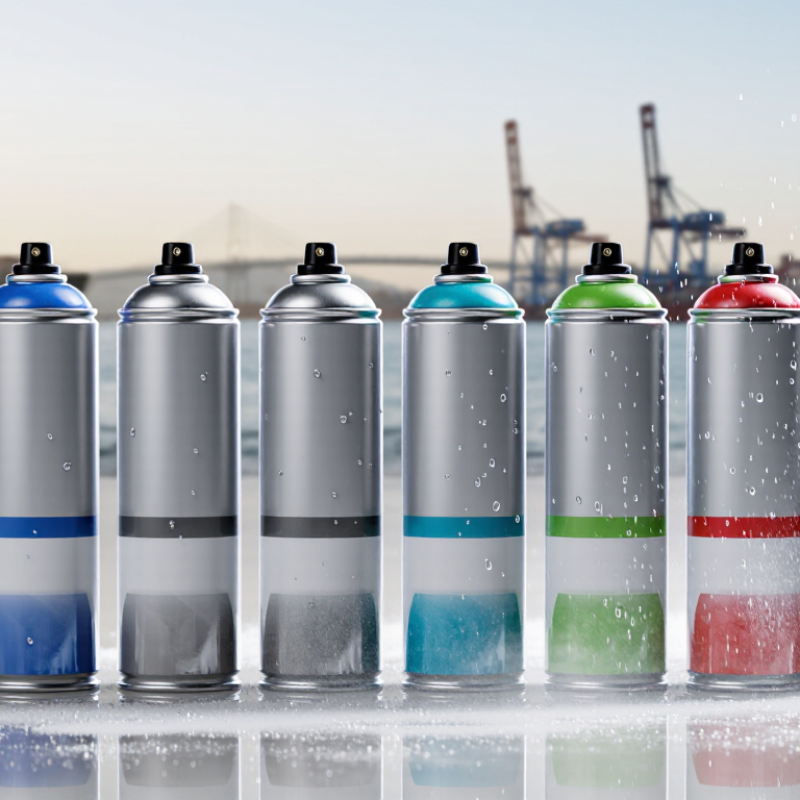
Salt-resistant aerosols are spray-applied coatings, lubricants, or corrosion inhibitors designed for chloride-rich environments. They form a protective film over steel, aluminum, fasteners, and electrical connections. The film can block moisture, slow oxidation, and reduce salt penetration. However, “salt-resistant” is not a perfectly standardized product category. Buyers should examine test evidence, not rely on the label alone.
The NACE IMPACT study estimated global corrosion costs at 2.5 trillion dollars annually, equal to about 3.4% of global GDP. This explains their value around coastal infrastructure, marine equipment, port machinery, vehicles, outdoor electrical cabinets, and agricultural systems. UNCTAD’s Review of Maritime Transport reports that ships carry over 80% of global merchandise trade by volume, creating constant demand for practical corrosion control. Small exposed parts matter.
Look for neutral salt spray results under ISO 9227 or ASTM B117. Test hours can indicate durability, but they do not perfectly reproduce tidal splash, abrasion, or polluted air. Surface preparation remains critical. Salt left under the film can continue attacking metal. Application thickness, drying time, temperature, and recoat intervals also affect performance. In field work, I have found that easy spraying encourages rushed preparation. That is a weakness worth admitting. Reliable suppliers should provide technical data sheets, safety information, batch traceability, and independent test records.
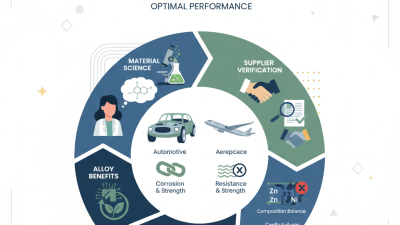
Salt-resistant aerosols are spray-applied products designed to protect metal surfaces from corrosion caused by saline moisture, marine air, and de-icing salts. The chart compares common reference salt concentrations used in relevant environments and corrosion testing: physiological saline at 0.9%, average seawater at approximately 3.5%, and the commonly used ASTM B117 salt-spray solution at approximately 5%.
When evaluating Chinese salt-resistant aerosol suppliers, begin with test evidence, not attractive packaging.
ISO 9227 and ASTM B117 salt-spray results should state panel preparation, coating thickness, exposure hours, and failure criteria. A 500-hour claim means little without photographs and scribe-creep measurements. Ask for batch records and independent laboratory reports.
Material control matters.
Check resin type, propellant compatibility, nozzle performance, and can corrosion resistance. Suppliers should provide safety data sheets, technical data sheets, and traceability from raw material to finished carton.
The 2016 NACE IMPACT study estimated global corrosion costs near US$2.5 trillion, or 3.4% of global GDP.
That figure explains why durability testing deserves more attention than low unit pricing.
Production capability is another filter.
The 2024 Grand View Research assessment valued the global aerosol cans market at roughly US$13 billion in 2023, showing the scale of competition and demand. However, market size does not prove supplier reliability.
Review filling accuracy, pressure checks, leak testing, and rejection rates over at least three production batches. Request samples from different lots. Small details expose weak systems.
I would also inspect factory ventilation, worker training, and waste handling, although these checks are sometimes rushed. That is a mistake. A supplier passing one test may still perform poorly after transport, humidity, or storage changes. Require pilot orders, clear corrective-action records, and written warranty limits before making a long-term decision.
China’s Top 10 Salt-Resistant Aerosol Suppliers are often assessed by coating durability, formulation control, and production consistency. Their products support marine equipment, outdoor machinery, fasteners, and metal structures exposed to salty air. Experienced suppliers usually offer primers, protective coatings, and maintenance sprays for different substrates.
A reliable supplier should provide salt-spray test data, batch records, safety documentation, and clear application instructions. Testing commonly follows recognized laboratory methods, but results can vary with film thickness, curing time, surface preparation, and humidity. Ask for recent reports. Old data can mislead.
The strongest suppliers control aerosol filling pressure, valve performance, and spray pattern during production. They also inspect adhesion, drying time, gloss, and corrosion resistance. Some provide sample orders before larger production runs. That is useful.
However, “salt-resistant” does not mean permanent protection. Poorly cleaned steel may develop rust beneath an excellent coating. Uneven spraying creates weak edges. I have seen suppliers focus heavily on laboratory hours while giving little practical guidance for coastal applications. That gap deserves attention. Buyers should compare technical support, quality consistency, packaging safety, export documentation, and response time, rather than choosing only by price. Suppliers with engineers who explain limitations honestly are usually easier to trust.
The leading ten suppliers usually offer aerosol coatings designed for coastal, marine, and industrial exposure. Their formulations often combine strong adhesion, moisture resistance, and salt-spray protection. Some products dry within minutes, while others need longer curing for harder films. Application matters greatly. A clean steel panel, controlled distance, and steady overlap improve coverage.
Reliable suppliers should provide ISO 9001 quality systems, current safety data sheets, and compliant labeling. Many also support REACH, RoHS, GHS, or region-specific documentation when applicable. Salt spray results should reference recognized methods, such as ISO 9227 or ASTM B117. However, test hours alone can mislead. Film thickness, substrate preparation, and scoring methods affect the result. Ask for complete reports, not impressive numbers.
Manufacturing capability separates experienced suppliers from simple fillers. Look for automated filling lines, pressure testing, batch coding, and retained samples. Strong factories can adjust resin type, nozzle pattern, color, can size, and propellant selection. They should control viscosity and spray output during every batch. Small trial orders are useful. A few suppliers may still show uneven atomization or inconsistent gloss between lots. That weakness deserves scrutiny. Factory audits, sample approval, and production records provide more confidence than catalog claims.
Selecting a salt-resistant aerosol supplier in China requires more than comparing prices. The China Aerosol Association’s 2023 industry statistics recorded roughly 2.4 billion aerosol units produced domestically, showing the market’s scale and manufacturing depth. However, capacity does not guarantee corrosion performance.
Ask suppliers for test reports using ISO 9227 or ASTM B117. These methods expose coated samples to salt spray, often for 240, 480, or 1,000 hours. The results are useful for comparison, not lifetime prediction. Request the substrate type, coating thickness, test duration, and failure rating. A glossy certificate is not proof. Check whether an independent laboratory issued it. Inspect how the supplier controls valve sealing, propellant compatibility, filling weight, and batch traceability. Small defects matter.
Visit the factory or arrange a remote production audit. Review incoming-material records and retain samples from recent batches. The supplier should explain how it handles humidity, coastal transport, and storage temperatures. Industry quality research consistently links traceability and process control with lower defect rates, but supplier claims still need verification. I would require pilot samples before signing a large order. Even then, one test may miss real warehouse conditions. Define acceptance limits, retest rules, packaging requirements, and corrective-action deadlines in writing. Price matters, but repeatable protection matters more.
Anonymous supplier-screening matrix based on commonly used aerosol packaging, corrosion-resistance, quality, and export-compliance requirements. Confirm all specifications with the supplier before purchase.
| Rank | Supplier Capability | Key Data Dimension | Recommended Screening Benchmark | Evidence to Request | Selection Priority |
|---|---|---|---|---|---|
| 1 | Corrosion-resistant can production | Can material, coating, and surface protection | Aluminum or coated steel construction with a documented internal lacquer and external corrosion-protection system suitable for the product formula and salt exposure. | Material declaration, coating specification, batch records, and corrosion-test report. | Critical |
| 2 | Salt-spray and corrosion testing | Test method, exposure period, and acceptance criteria | Testing performed under ISO 9227 or ASTM B117, with the exposure duration and pass/fail criteria agreed in the technical specification. | Independent or in-house test report showing sample identification, test conditions, duration, and final appearance. | Critical |
| 3 | Valve and actuator compatibility | Seal material, dip tube, spray pattern, and formula compatibility | Compatibility confirmed through formula-specific stability testing, with no swelling, leakage, blockage, corrosion, or unacceptable spray change. | Compatibility matrix, component drawings, seal-material details, and filled-sample test results. | Critical |
| 4 | Leakage and pressure control | Container integrity, crimp quality, and pressure-test control | Documented leak testing and pressure-control procedures matched to the can design, propellant, filling temperature, and applicable transport rules. | Quality-control plan, crimp-dimension records, leak-test data, and product-safety documentation. | Critical |
| 5 | Available aerosol sizes | Nominal volume and dimensional options | Common commercial formats generally include approximately 50–750 mL, subject to can diameter, height, valve, and filling-line compatibility. | Dimensional drawings, nominal capacity, brimful capacity, neck specification, and tolerance table. | High |
| 6 | Quality-management system | Process control, traceability, and corrective action | A current ISO 9001-based quality system with lot traceability, incoming inspection, in-process control, final inspection, and documented corrective actions. | Valid certificate, audit report, inspection plan, sample certificate of analysis, and traceability example. | High |
| 7 | Hazardous-goods compliance | Classification, labeling, packaging, and transport documentation | Capability to prepare documentation for UN 1950 aerosols and applicable GHS, IMDG, IATA, ADR, or destination-market requirements. | Safety data sheet, transport classification, packaging instructions, and previous export documentation with sensitive details removed. | Critical |
| 8 | Environmental and chemical compliance | Restricted substances and sustainability controls | Written control of restricted substances, recyclable metal content, waste handling, and customer-market requirements such as REACH or equivalent regulations. | Declaration of conformity, material composition statement, recycling information, and relevant laboratory reports. | High |
| 9 | Production capacity and delivery control | MOQ, sample lead time, mass-production lead time, and capacity reservation | Supplier can provide a written quotation, sample schedule, production plan, monthly capacity statement, and contingency plan for raw-material or transport disruption. | Capacity statement, production schedule, order milestone plan, and on-time-delivery records with confidential information removed. | Medium |
| 10 | Customization and after-sales support | Artwork, tooling, pilot runs, complaint response, and technical service | Clear approval process for artwork and tooling, documented pilot-run procedures, defined complaint-response timing, and retained production samples. | Artwork proof, tooling quotation, pre-production sample, inspection checklist, and complaint-handling procedure. | Medium |