China Best Acid Zinc Plating Techniques for Superior Metal Protection?
The importance of metal protection cannot be overstated. Acid Zinc Plating offers a robust solution for enhancing the durability of various metal surfaces. This method is gaining popularity in industries such as automotive and electronics. By applying a layer of zinc using acid, metal parts gain remarkable resistance to corrosion.
Many professionals agree on the effectiveness of Acid Zinc Plating. However, its successful application requires technical expertise. Factors like bath composition, temperature, and pH play crucial roles in the plating process. Even minor deviations can affect the outcome significantly. This complexity demands both experience and knowledge to achieve superior results.
Moreover, while Acid Zinc Plating provides excellent protection, it isn’t without shortcomings. Some might struggle with coating thickness consistency. Others question its performance under extreme environmental conditions. Addressing these challenges is key to maximizing its effectiveness. The continuous evolution of techniques can lead to improved solutions in the future.
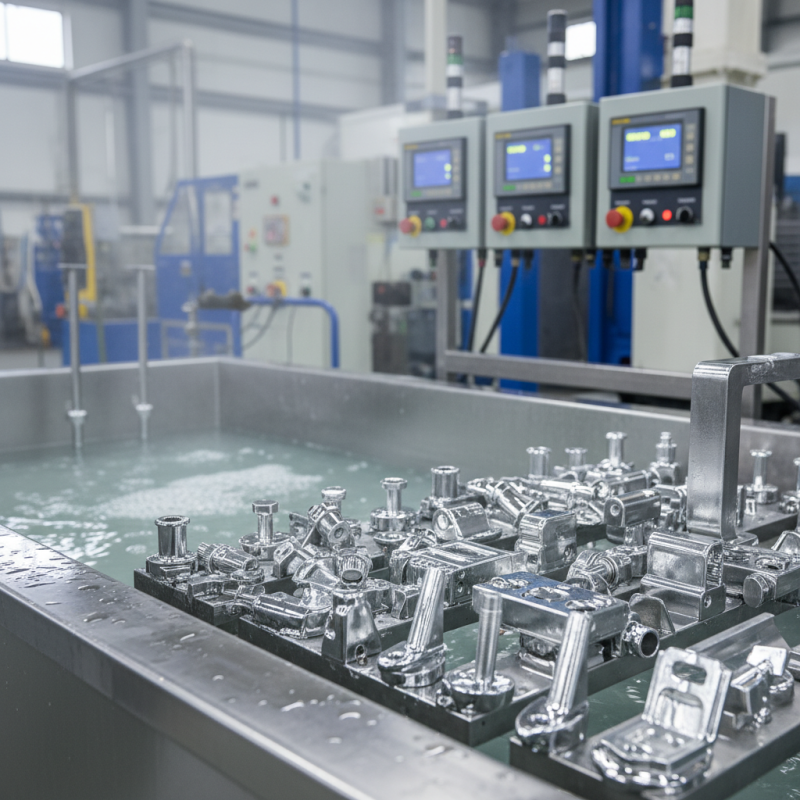
Overview of Acid Zinc Plating Process and Its Importance in Metal Protection
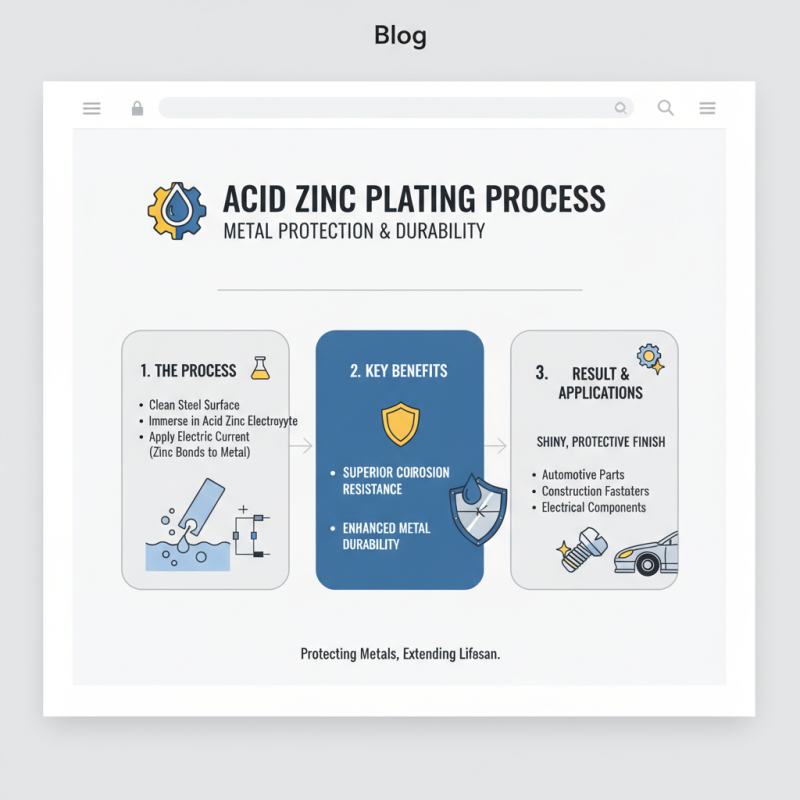
Acid zinc plating is a vital process for enhancing metal protection. It involves applying a thin layer of zinc to steel surfaces. This method offers excellent corrosion resistance, making it ideal for various applications. Metals treated with this process exhibit a shiny finish along with increased durability.
For optimal results, proper surface preparation is crucial. Cleaning the metal surfaces ensures that the zinc adheres effectively. The thickness of the zinc layer should be controlled accurately to prevent issues. An uneven coating may lead to premature corrosion. Regular maintenance of the plating bath is also important to avoid contamination.
Tips: Always monitor the pH levels during the plating process. A consistent pH ensures uniform coating. Additionally, consider the environmental conditions. Humidity and temperature can impact the final finish. Proper storage of plated components protects them from environmental damage. Implementing these practices can significantly improve the longevity of your metal products.
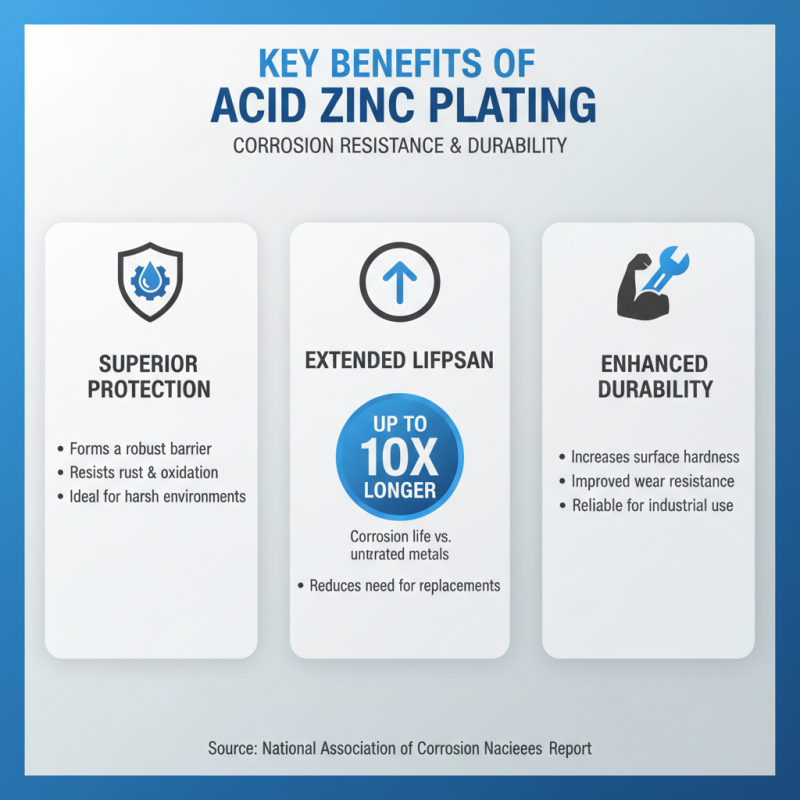
Key Benefits of Acid Zinc Plating for Corrosion Resistance and Durability
Acid zinc plating stands out for its exceptional corrosion resistance and durability. Studies show that this technique can enhance metal surfaces significantly. According to a report from the National Association of Corrosion Engineers, metals treated with acid zinc plating can have a corrosion life extended by up to 10 times compared to untreated metals. This makes it an attractive option for industries reliant on durability.
One key benefit of acid zinc plating is its ability to create a uniform and adherent coating. This thorough application minimizes the risk of corrosion, particularly in harsh environments. A report by Plating & Surface Finishing indicates that acid zinc plating can provide a barrier that protects against rust in up to 95% of conditions. However, the formulation and application process requires meticulous attention to detail for optimal results.
Tips: Regularly inspect plated surfaces to identify any imperfections in the coating. Such checks can reveal early signs of wear or corrosion, allowing for prompt corrective measures. Additionally, consider the environment where metal components are used, as different conditions may affect longevity. Proper preparation before plating can enhance adhesion and overall performance.
Latest Advances in Acid Zinc Plating Techniques for Enhanced Performance
Acid zinc plating techniques have evolved significantly in recent years, leading to improved metal protection. These advancements focus on enhancing performance while addressing environmental concerns. New formulations aim to achieve better corrosion resistance. This is essential for industries facing harsh conditions.
One noteworthy development is the fine-tuning of bath chemistry. Optimizing bath temperature and pH levels can enhance deposit quality. Furthermore, the introduction of proprietary brighteners has transformed the coating's appearance and durability. However, these innovations require careful handling and monitoring, posing challenges for operators. Reliable training and adherence to best practices are vital in maintaining quality.
Additionally, the push for sustainability drives researchers to explore eco-friendly alternatives. While traditional methods often result in waste, new techniques are emerging. These developments show promise, yet they need thorough testing. Ensuring consistent quality while minimizing environmental impact remains a complex task. The balance between performance and responsibility is an ongoing area of exploration.
China Best Acid Zinc Plating Techniques for Superior Metal Protection
The chart above illustrates the corrosion resistance capabilities of various acid zinc plating techniques. As shown, Technique C offers the highest resistance to corrosion, demonstrating the advancements in acid zinc plating for superior metal protection.
Environmental Considerations in Acid Zinc Plating Processes
Acid zinc plating is popular for protecting metals. Yet,
environmental concerns arise during the process.
The chemicals involved can harm ecosystems if not handled properly. Responsible practices are essential to minimize risks.
Proper waste disposal methods should be implemented. Ensure that any waste generated is treated before disposal. Using
less toxic alternatives can also significantly reduce environmental impact.
This requires continuous improvement in techniques. Innovation remains crucial for sustainable plating processes.
Tips: Regularly assess your operations for potential environmental impacts.
Train employees on safe chemical handling. Encourage a culture of environmental responsibility
within your team. Small adjustments can lead to significant benefits for both metal protection and the
environment. Regular audits can help identify areas for improvement
and ensure compliance with environmental standards.
Comparison of Acid Zinc Plating with Other Metal Coating Methods
Acid zinc plating stands out among various metal coating techniques for its effectiveness in corrosion resistance. This method deposits a layer of zinc on steel substrates, significantly enhancing their longevity. Reports indicate that acid zinc-coated components can withstand corrosion for up to 1,000 hours in salt spray tests. In contrast, galvanizing offers protection but may leave rough surfaces, making acid zinc a preferred choice for aesthetic components.
While acid zinc plating excels in certain applications, it is essential to recognize its limitations. The process may require post-treatment processes to achieve optimal adhesion, unlike more straightforward options like powder coating. Additionally, the layer of zinc can be thinner compared to other methods, potentially leading to reduced longevity under harsh conditions. Some reports suggest that improper application can decrease effectiveness by 30% or more.
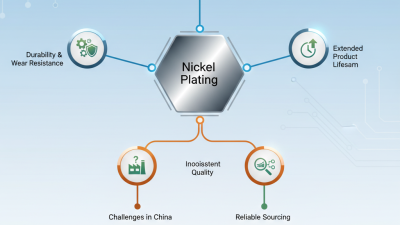
Furthermore, other coating techniques, such as electroless nickel plating, provide unique benefits, like uniform thickness and enhanced hardness. However, these alternatives often come with higher costs and longer application times. Therefore, when considering metal protection, acid zinc plating remains a reliable method, but each coating type should be evaluated for specific project needs.