Why Is Dehydrating Agent Essential in Food Preservation?
Food preservation is a critical aspect of maintaining food quality and safety. One essential component in this process is the dehydrating agent. Dehydrating agents play a pivotal role in reducing moisture levels in food. This reduction inhibits microbial growth, extending the shelf life of products. Without these agents, food would spoil quickly, leading to waste and health risks.
The use of dehydrating agents is both an art and a science. It requires knowledge of specific foods and their moisture content. Different dehydrating agents, such as salt, sugar, or chemical preservatives, have distinct properties and effects. Each can impact the flavor, texture, and nutritional value of the preserved food. This complexity underscores the importance of expertise in the field of food preservation.
However, the effectiveness of dehydrating agents can sometimes be misunderstood. Overuse may lead to undesirable texture or taste alterations. It is crucial for food producers to strike a balance. They must consider both preservation and consumer preferences. Furthermore, the reliance on dehydrating agents raises questions about the authenticity of preserved foods today. These factors compel us to critically reflect on our food systems and preservation methods.

The Role of Dehydrating Agents in Food Preservation
Dehydrating agents play a vital role in food preservation. They reduce moisture levels in foods, hindering microbial growth. This process extends shelf life and maintains nutritional value. When moisture is removed, bacteria, yeast, and molds cannot thrive. The result is safer food with longer usability.
Common dehydrating agents include salt, sugar, and various preservatives. Each has unique properties that affect texture and flavor. For instance, salt draws out moisture through osmosis. While effective, it can alter taste profiles. Not all dehydrating methods are perfect. Some can change the original flavor and appearance of foods. Moreover, excessive use of preservatives may raise health concerns.
Understanding the right balance in using dehydrating agents is essential. Too much can lead to overly salty or sweet products. Consumers must pay attention to ingredient labels. Organic options often use minimal dehydrating agents. This approach can lead to fresher flavors, though with a shorter shelf life. The challenge lies in finding a method that suits personal preferences while ensuring food safety.
Why Is Dehydrating Agent Essential in Food Preservation? - The Role of Dehydrating Agents in Food Preservation
| Dehydrating Agent |
Function |
Common Uses |
Advantages |
| Silica Gel |
Absorbs moisture |
Dry fruits, snacks |
Prevents mold growth |
| Calcium Chloride |
Absorbs water vapor |
Commercial food preservation |
Effective in high humidity |
| Potassium Sorbate |
Prevents fermentation |
Fruits, cheese |
Safe and GRAS status |
| Sodium Benzoate |
Inhibits bacterial growth |
Acidic foods, beverages |
Cost-effective solution |
| Ascorbic Acid |
Antioxidant |
Fruits, juices |
Preserves color and taste |
Types of Dehydrating Agents Commonly Used in Food
Dehydrating agents play a crucial role in food preservation. They help remove moisture, preventing the growth of bacteria and mold. Various types of dehydrating agents are commonly used in the food industry. Understanding these agents can enhance your food storage methods.
One popular dehydrating agent is salt. Salt draws moisture out of foods, making it a natural preservative. It can enhance flavor while extending shelf life. Another common agent is sugar, often used in fruits. It creates a barrier against moisture and provides a sweet taste. Spices like paprika and cayenne can also be effective for preservation. They not only pack flavor but can inhibit microbial growth as well.
**Tips**: Be mindful of using too much salt or sugar, as it could alter the food's taste. Always test small batches to find the right balance. Additionally, consider using airtight containers after dehydration. This prevents rehydration from humidity. Over time, you may find that certain combinations work better than others. Experiment with different agents to discover what suits your culinary needs.
Importance of Dehydrating Agents in Food Preservation
Mechanisms of Dehydration and Its Impact on Microbial Growth
Dehydration is a crucial method in food preservation. It reduces moisture, thus impeding microbial growth. According to a report by the Food and Agriculture Organization (FAO), moisture content significantly influences bacterial activity. Foods with moisture content below 15% experience slowed microbial growth, minimizing spoilage. This principle is fundamental to extending shelf life.
The mechanisms of dehydration work on various levels. First, heat removes water from food. This process not only changes texture but also concentrates flavors. Interestingly, not all microorganisms are equally affected. Some, like certain molds, can withstand lower moisture levels. Regular testing is necessary to ensure humidity levels remain effective.
Inadequate dehydration can lead to problems. Foods may develop spoilage or undesirable tastes. A 2022 study highlighted that improperly dried fruits retained high moisture, promoting mold growth. Even a small oversight can result in significant issues. Therefore, understanding the nuances of dehydration is vital for effective food preservation.
Benefits of Using Dehydration for Long-Term Food Storage
Dehydration is a powerful method for food preservation. By removing moisture, it prevents the growth of bacteria and mold. This creates a safer environment for long-term food storage. When food is dried, it becomes lighter and easier to store. This is essential for reducing storage space.
One of the benefits of dehydration is enhanced shelf life. Foods like fruits and vegetables can last for years when stored properly. Imagine dried apples, still bursting with flavor after months. You can snack on them whenever you want. The process also retains most nutrients, keeping your meals healthy. However, if not done right, some nutrients may be lost. It's important to monitor temperature and drying time closely.
Taste can change during dehydration. Some people might find dehydrated potatoes less appetizing than fresh ones. This can be a drawback for some, but others appreciate the concentrated flavors. Dehydration is not flawless, yet it provides many benefits. A reliable method for food storage, it can transform your pantry for the better.
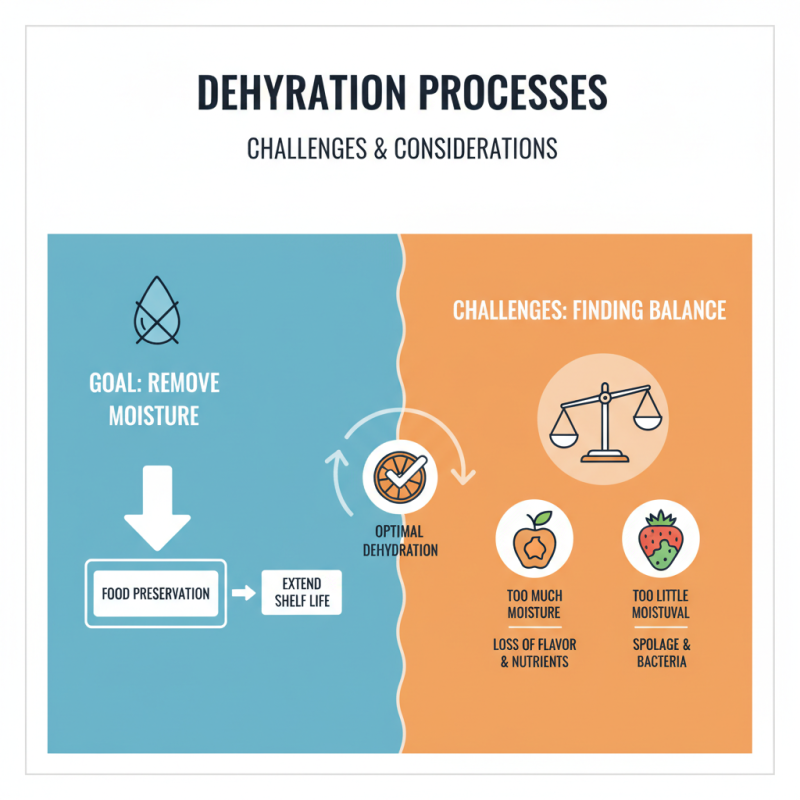
Challenges and Considerations in Dehydration Processes
Dehydration is a vital method for food preservation, but it comes with its own set of challenges. The main goal is to remove moisture. However, achieving the right balance is tricky. Remove too much, and the food loses flavor and nutrients. Too little moisture can lead to spoilage.
When dehydrating, consider temperature and humidity. These factors affect the drying rate. High humidity can slow the process, while high temperatures may cook the food instead. It's crucial to monitor these conditions carefully.
**Tips:** Always use fresh food for the best results. Pre-treating fruits and vegetables can enhance flavor and preserve color. Use an air-tight container for storage to maintain the quality of dehydrated foods. Evaluate your dehydration technique regularly. Are you achieving the desired texture and taste? Adjust your methods as needed to find what works best.